








Introduction to Fascisterne
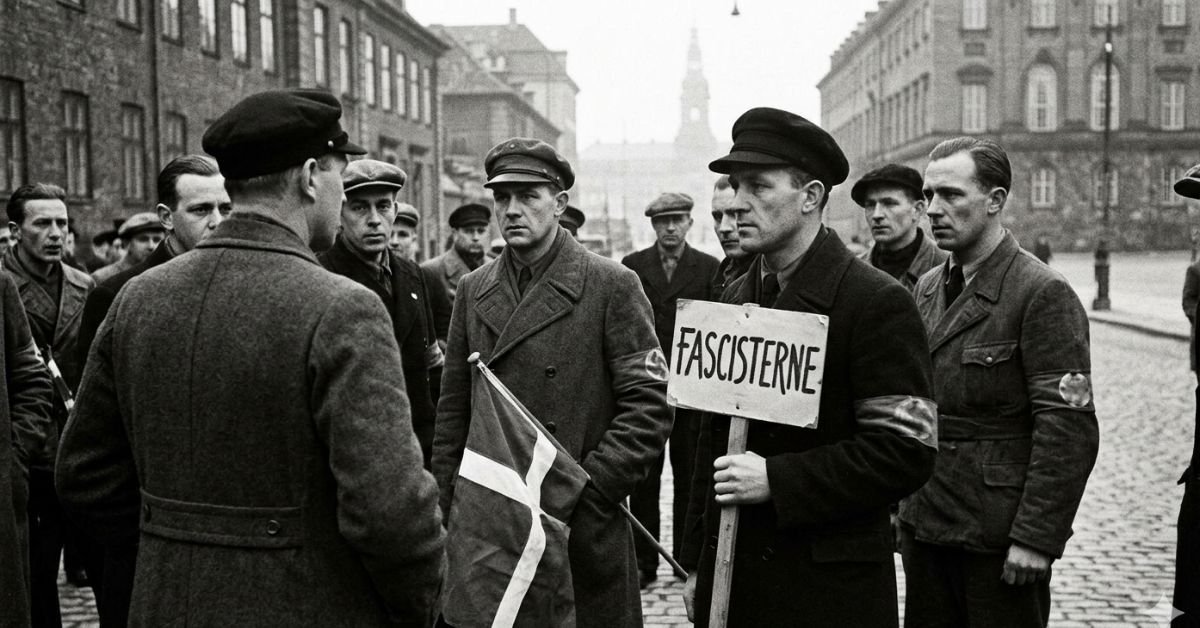
Fascisterne, a word that stirs up powerful feelings and clear mental pictures of the past, has had a significant impact on history. Fascism, which is sometimes characterised as an authoritarian philosophy on the far right, advocates ultranationalism and the totalitarian goal of creating a homogenous society. The adherents of this ideology, called “fascisterne” in Danish, have made an everlasting impression on the world.
To what end, though, did such a formidable force emerge? How did its popularity skyrocket in different nations? Fascism can only be understood by tracing its history and investigating its foundational concepts and prominent people. The impact of fascisterne on civilisations throughout the world may be better understood by looking at these aspects.
Delving further into this intricate subject, we will discover not only the factors contributing to their rise, but also the enduring impact on politics and society. Come along as we explore the past to uncover the tale of a divisive historical movement.
Origins of Fascisterne
Fascisterne arose in the early 20th century, with anti-communism and nationalism as its core ideologies. It was a reaction to the societal unrest that followed WWI. Authoritarian beliefs flourished in an environment of economic uncertainty and political instability.
Many people believe that fascism originated in Italy. The ascent to power by Benito Mussolini was a watershed moment. Many residents who had lost hope in the government found solace in his calls for strength, togetherness, and regeneration.
Having said that, fascism was not born out of thin air. Many things had an impact, including European military traditions and past nationalist movements. Its expansion was further spurred by the dread of socialism.
Additionally, cultural considerations were essential. People seeking order in the midst of anarchy were drawn to fascism because of its primary tenet, the elevation of the state over individual liberties. In Europe, this conglomeration set the stage for a destructive yet important movement.
The Rise of Fascisterne in Europe
A great deal of dissatisfaction characterised the early 20th-century fascist movement in Europe. Radical ideologies flourished during times of economic and social instability.
Benito Mussolini took advantage of Italians’ resentment and dissatisfaction after WWI. A large portion of Italian society believed in his claims that he would bring back the country’s golden days. A precedent reverberated across Europe with the founding of the Fascist Party.
At the same time, Germany had its own problems. The wounds caused by the Treaty of Versailles prompted animosity and the need for decisive leadership. By appealing to these sentiments, the Nazi Party under Adolf Hitler offered a nationalist and racist vision for the future.
In countries where stability was a problem, fascism grew rapidly. It flourished in places where established political systems seemed feeble or unable to address the issue at hand. In the midst of anarchy, citizens looked for a sense of belonging, and the fascists gave it to them through their totalitarian rule and passionate propaganda.
Key Figures and Ideologies
Numerous influential people who pioneered new political ideologies in the early 20th century molded the fascists, or fascisterne. One of the most famous leaders is Benito Mussolini. His plan included strong nationalist sentiments and extensive governmental regulation of daily life.
Mussolini was an influence on Adolf Hitler, but Hitler put his own spin on it by combining fascism with racial philosophy. Across Europe, his brand sowed discord and hatred, with disastrous results.
Not only that, but fascist philosophers like Giovanni Gentile helped advance ideas like “actual idealism.” Individual rights were superseded by allegiance to the state.
Militarism and anti-communism were additional ideas that surrounded fascisterne. These factors brought followers together beneath a flag that encouraged solidarity and strength while silencing those who disagreed. A powerful cocktail was created by combining these principles, which had an impact on several nations during times of upheaval.
Effects of Fascisterne on Society and Politics
Societies were drastically altered by fascism. It ushered in a new era of authoritarian government by destroying democratic institutions. Diverse voices were muzzled by the crushing of political opposition.
Propaganda took on a significant role in fascist governments. In order to preserve authority and foster loyalty among citizens, the state controlled the narratives in the media. An environment where freedom was overwhelmed by fear was established via this distortion of facts.
Extreme nationalism was a socially propagated ideology of fascism. There was a lot of xenophobia and discrimination against minorities since people were told to put the country first.
Additionally, it had a major effect on cultural norms. Political gain led to the censorship or co-optation of art and literature, which in turn stifled free speech.
When it came to the economy, fascist regimes sided closely with powerful industries. The rise of military power was frequently given more priority than public welfare measures by this collaboration.
Such changes not only altered nations but also inflicted wounds that would remain unhealed for decades.
Comparison with Other Authoritarian Regimes
There have been other authoritarian governments in the past, and fascisterne are very different from them. Some authoritarian regimes rely more on instilling dread than Fascisterne, which stresses ultranationalism, militarism, and a single vision for the state.
Consider Stalinist Russia. Rather than highlighting national supremacy, collectivization and class conflict received more attention. Here, rather than a nationalist goal, Marxist-Leninist ideas were at the core of ideology.
Just as fascism has a larger ideological framework that it bases its control on, military dictatorships frequently depend on repression and sheer force. Regime survival, rather than a unified nationalist narrative, is usually the first priority for these leaders.
These comparisons highlight how many pathways can lead civilizations to darkness and how different approaches are used by people who want control over others at the cost of freedom.
Legacy of Fascisterne in Modern Times
There is still a huge shadow cast by Fascisterne in today’s world. Many political movements around the world have its influence, however they go by different names and adhere to different philosophies.
As politicians appeal to the disillusioned masses through their rhetoric, populism has grown in popularity. Reminiscent of fascist strategies is the appeal of a powerful leader who pledges to revive national pride.
In addition, there are occasions when symbols linked to fascist governments of the past reappear during demonstrations and rallies. Strong feelings and arguments over nationalism vs. globalism are sparked by this renaissance.
Ideology fights have broken out on social media in recent years. Through the use of platforms, extremist groups disseminate propaganda that draws connections between historical and contemporary power conflicts.
By learning about this history, we can better see red flags in the news today. By being cognizant, communities may better protect their democratic principles against the authoritarian tendencies that may be hiding in plain sight.
Conclusion
Even in today’s world, the legacy of Fascisterne reverberates. Some of the world’s most prominent political movements now reflect its tenets. The perils of ultranationalist ideology and totalitarian governments are brought to light by the lessons of the past.
In order to stop similar trends from happening again, it’s important to understand fascism. In the fight against such notions, knowledge and education are our most powerful weapons. We can create a better, more equitable future that prioritizes democracy over authoritarianism by learning from our mistakes.
It is our civic duty to fight prejudice and discord at all costs. Every generation has a responsibility to fight for freedom and equality, and the history of fascisterne serves as a warning against the temptation of dictatorship. By getting involved in our communities, we can make sure that the past doesn’t repeat itself and build a society based on mutual respect and tolerance instead of fear.
For Latest Updates Visit liquid-imagination.com